Ever watched a video of an awesome concert or conference and felt like you were right there? That's the magic of event video production. It’s way more than just pointing a camera at the stage. It's about capturing the vibe and telling a story that people will remember long after the event is over.
What Are Event Video Production Services?
Think of event video production services as hiring a team of pro storytellers for your big day. They don’t just hit record—they look for the best moments, the key messages, and the real emotions, then mix them all together into a video you can share with the world.
A professional crew brings all the right gear, from fancy cameras to crystal-clear microphones, so you don't have to worry about a thing. This frees you up to actually run your event and hang out with your guests, knowing that all the important stuff is being captured perfectly.
More Than Just Pressing Record
Anyone can press a record button on their phone, but a professional video team brings a mix of tech skills and creative ideas. They’re there to bottle up the atmosphere of your event and turn it into something that looks and sounds amazing.
Here’s a sneak peek at what they actually do:
- Strategic Planning: It all starts with a chat. Before setting up a single camera, the team wants to know your goals. Do you want a video to get sponsors for next year? Or a quick, flashy clip for social media? This plan shapes everything they do next.
- Professional Equipment: This is where the pros really shine. They show up with high-quality cameras, special mics, and lighting to make sure your video is top-notch—a huge step up from a shaky phone video.
- On-Site Direction: During the event, the crew is like a well-oiled machine. They know exactly where to be to get the perfect shot of the main speaker, the crowd’s reaction, or people chatting and networking, all without being in the way.
- Creative Editing: This is where the story really comes to life. In the editing room, all that raw footage gets chopped up and pieced together. They add music, create cool graphics, and balance the colors to make an awesome video that tells your event's story.
Why It Matters in a Growing Industry
The events industry is blowing up. It was worth a massive $736.8 billion in 2021 and is expected to hit an insane $2.5 trillion by 2035. In a world this big and competitive, a great video isn't just a "nice-to-have"—it's a "must-have" to stand out. For businesses, mastering corporate event video production is key to staying in the game.
Simply put, event video production turns a one-time event into something you can use forever. It lets you relive the moment, share it with way more people, and get everyone hyped for whatever you do next.
The Most Common Types of Event Videos
Not all event videos are the same. Think of it like a toolbox—you wouldn't use a hammer to turn a screw. The right type of video depends on your goal. Are you trying to get people excited beforehand, show off the best moments afterward, or connect with people around the world as it happens?
Picking the right format is the first big step. Video is so huge now that the global video production market was valued at $70.40 billion in 2022 and is predicted to jump to $746.88 billion by 2030. That’s not just growth; it’s a total game-changer for how we all communicate.
This visual map breaks down the key stages of any event video project, from the first ideas all the way to the final video.
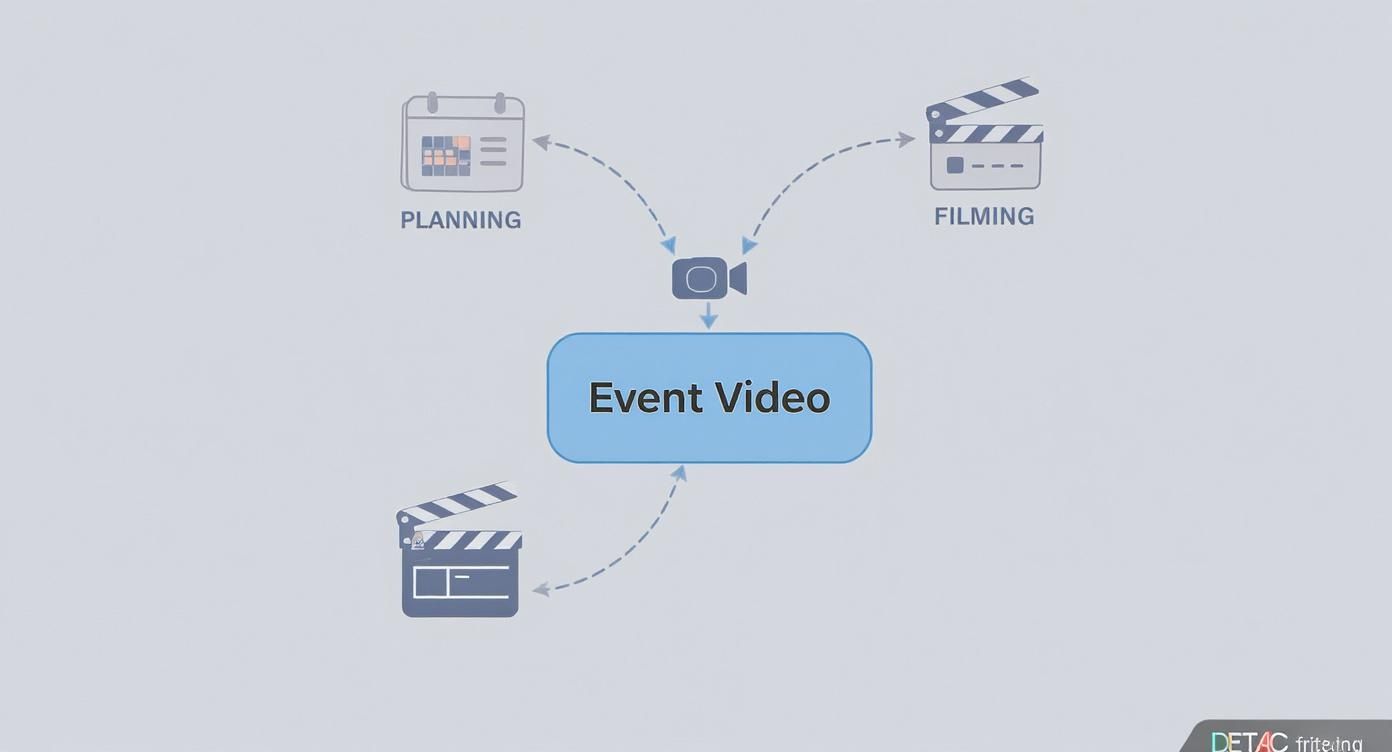
As you can see, a great video doesn't just happen by accident. It’s built on a solid plan, skilled filming, and smart editing. Every single piece is super important.
To help you figure out what you need, let's break down the most common types of event videos.
Table: Event Video Types and Their Purpose
| Video Type | Primary Goal | Best Used For | Key Feature |
|---|---|---|---|
| Hype Video | Build excitement & sell tickets | Social media, email marketing before an event | Short, fast-paced clips and cool graphics |
| Highlight Reel | Show off the event's best moments | Website homepages, social media, sponsor follow-ups | A movie-style summary of the event's energy |
| Live Stream | Reach a global audience in real-time | Conferences, product launches, award shows | A professional broadcast with multiple cameras |
| Session Recording | Create educational videos that last | On-demand content, virtual tickets, resources for attendees | A clear video of a speaker and their slides |
Each type of video gives you a different way to connect with your audience, whether they’re in the room or watching from their couch.
Hype Videos That Build Excitement
A hype video is like the opening act for your event. Its only job is to get people's attention and create a buzz before the big day. These are usually short, high-energy clips that are perfect for your social media feeds.
The goal is simple: give people serious FOMO (fear of missing out). By showing quick cuts of past events, awesome speaker quotes, and cool graphics, you build up so much excitement that people can't wait to buy tickets. A killer animated logo can make your intro unforgettable. For tips, check out our guide on how to animate a logo.
A powerful hype video doesn't just tell people about your event; it makes them feel like they're already missing out. It's an invitation to an experience, not just a date on the calendar.
Highlight Reels That Capture the Magic
After the event is over, a highlight reel becomes your best friend for marketing. It's a cool recap of all the best parts—the laughs, the big ideas, the new connections—all packed into a dynamic two- or three-minute video. It's your event's story, told in the most exciting way possible.
This kind of video is perfect for sharing on your website, social media, and in thank-you emails. It helps:
- Remind attendees what an awesome time they had.
- Show everyone else what they missed, making them want to come next time.
- Give sponsors something cool to see that shows off the event's success.
A good highlight reel makes your event last forever, turning a one-day thing into a marketing tool that works for you all year.
Live Streaming for Global Reach
Why limit your audience to who can fit in one room? Live streaming lets you broadcast your event to people all over the world, as it's happening. This is perfect for big conferences, product launches, or award shows where you want as many people as possible to tune in.
To pull this off, you really need professional event video production services. A dedicated crew can handle multiple cameras, make sure the sound is perfect, and even add cool interactive stuff like live polls and Q&As. It’s the difference between a shaky phone stream and a pro broadcast that makes people watching from home feel like they're right there with you.
Session Recordings for Lasting Value
For events like conferences or workshops, the talks are the main attraction. Session recordings capture entire presentations so people can watch them later. These videos are usually more straightforward than a highlight reel, focusing on clear audio and a good view of the speaker and their slides.
By recording these talks, you create a library of awesome content. You can sell these videos as a "virtual ticket," share them with attendees who want a refresher, or cut them into smaller clips for social media. It turns a one-time talk into a resource that keeps on giving.
How Your Event Video Gets Made
Ever wonder how a whole day of speakers, audience reactions, and networking gets turned into a slick, exciting video? It’s not magic. It's a carefully planned process that every pro follows, broken down into three main stages.
Think of it like building a house. You don't just start nailing boards together. First, you need a blueprint (that's Pre-Production). Then, you build the frame (Production). Finally, you add all the finishing touches like paint and furniture (Post-Production).
Let’s pull back the curtain and see how it all works.
Stage 1: Pre-Production – The Blueprint for Success
This is the most important stage, and it all happens before any cameras start rolling. Pre-production is all about planning and making sure everyone knows the game plan. A great video is always built on solid preparation.
Here’s what usually happens:
- Discovery Calls: The production team sits down with you to really get what you're trying to do. What's the video for? Who are you trying to reach? What should people feel when they watch it?
- Storyboarding and Shot Lists: For creative videos like a highlight reel, the team might draw up a storyboard—kind of like a comic book version of the video. They’ll also make a detailed shot list, which is a checklist of every single shot they need to get on the day.
- Logistics and Scheduling: This is all the boring but important stuff. The team works with your venue, makes a schedule for the crew, and makes sure all the equipment is tested and ready.
Getting the plan right here saves you from chaos later and makes sure the final video is exactly what you wanted.
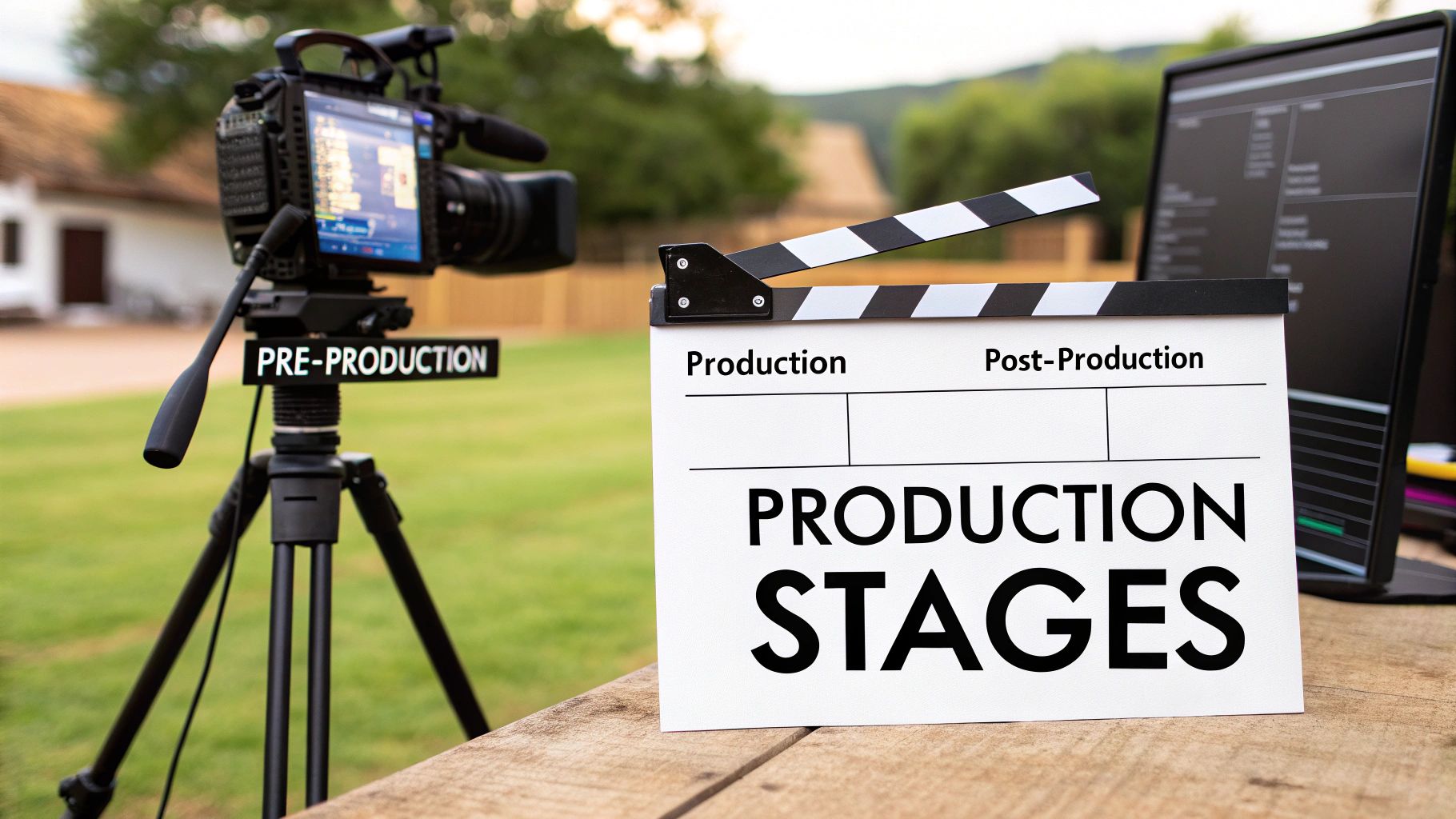
Stage 2: Production – Capturing the Action
This is the part everyone thinks of—the actual day of filming. The crew shows up, sets up their gear, and starts capturing all the cool moments of your event. Their goal is to be everywhere they need to be without being a distraction.
During production, the team is busy:
- Setting up Cameras and Audio: They'll set up multiple cameras to get different angles, like wide shots of the stage and close-ups of the speaker. They also use pro microphones to capture crystal-clear sound, which is just as important as the video.
- Following the Shot List: The crew works their way through the shot list they made earlier. They’re making sure to get the big speeches, crowd reactions, background footage (called B-roll), and any interviews you planned.
- Adapting to the Moment: Events are live and unpredictable. A pro crew knows how to go with the flow and capture those awesome, unplanned moments that often end up being the best parts of the video.
Stage 3: Post-Production – Where the Magic Happens
Once the event is over and the gear is packed up, all that raw footage goes to the editing room. This is where the story really takes shape.
Post-production is where an editor acts like a sculptor, chipping away at a block of marble (the raw footage) to reveal the masterpiece hidden inside. It's a mix of tech skill and creative storytelling.
This final stage involves a few key steps:
- Footage Assembly: The editor goes through hours of footage, finds the absolute best clips, and puts them in order to build a story.
- Adding Music and Sound: The right song can completely change the feel of a video. The editor also cleans up the audio, making sure speakers are easy to understand and getting rid of distracting background noise.
- Color Correction and Graphics: The editor tweaks the colors to make everything look vibrant and professional. This is also when they add your logo, text, and other graphics.
- Revisions and Final Delivery: You'll get a first draft to watch. After they make any changes you ask for, they send you the final, high-quality video file, ready to share with the world.
This whole process might sound complicated, but it's the secret to making a video that really stands out. If you're curious about this final step, check out these helpful video editing tips for beginners.
Breaking Down Event Video Production Costs
So, let's get to the big question: "How much is this going to cost?" There's no single price tag for event video production, but I can walk you through what drives the cost. When you know what you’re paying for, you can make better decisions for your budget.
Think of it like building a custom car. A basic model gets you where you need to go, but adding a bigger engine, a cool paint job, and a booming sound system will change the final price. The same goes for video. A simple, one-camera shoot of a speaker is your basic model. A huge multi-day conference with live streaming and a flashy highlight reel? That's the fully loaded, custom version.
The Key Factors That Influence Price
A few key things will always affect the final quote you get. Once you understand these, you'll see where your money is going and where you might be able to save.
Here are the main things that affect the cost:
- Event Duration: This one's simple. A half-day workshop will cost less than a three-day conference. The longer the crew is on-site, the more it will cost.
- Crew Size: Are we talking about one person with a camera or a whole team? Bigger events, especially with live streaming, need a director, a sound person, and several camera operators to run smoothly.
- Equipment Needs: The gear itself is a big part of the budget. A basic setup might just be a camera or two. But if you want drone shots, cool lighting, and perfect audio from multiple speakers, you’ll need more specialized—and more expensive—equipment.
Understanding Your Deliverables
What you get after the event is over is another huge piece of the price. The final video files you receive are called deliverables. A single quote often includes a package of different videos, each with a specific job.
Don't let the term "deliverables" throw you off. It's just a fancy way of saying, "What videos do I actually get at the end of this?" Getting this clear from the start means no surprises later.
A standard package might include:
- A Cinematic Highlight Reel: Think of this as the 2-3 minute movie trailer for your event. It's perfect for your website and social media and takes a lot of skill to edit.
- Full Session Recordings: These are the complete talks from your main speakers. They’re less flashy and more about providing long-term value for your attendees.
- Short Social Media Clips: We’re talking short, 15-60 second videos that are perfect for grabbing attention on Instagram, TikTok, or LinkedIn.
The more videos you need and the more complicated they are, the more time an editor has to spend, which directly affects the cost. One smart way to manage this is to use pre-made assets when you can. For example, learning how to use a template for your event intro can give you a polished look without spending a ton on custom animation.
Creating Event Intros That Captivate Your Audience
While a highlight reel shows off the best moments after the event, a killer intro video sets the stage for everything to come. Think of it like the opening credits of a blockbuster movie. Its only job is to grab everyone’s attention and make them feel like they're about to see something amazing.
This is way more than just flashing your logo on a screen. It’s your chance to set the mood and get a real buzz going in the room. A great intro video silently tells your audience, "You're in the right place, and something awesome is about to start."
Using Animation to Build Unforgettable Energy
This is where professional animation really makes a difference. Instead of a boring slideshow, imagine bringing your event's theme to life with cool 2D or 3D animation, all perfectly timed to an epic soundtrack. At Priyansh Animations, we specialize in turning a brand’s message into a stunning animated intro that starts the show with a bang.
Just think about the difference it can make:
- For a tech conference: Imagine an intro with slick, futuristic graphics flying across the screen, instantly setting a tone of innovation.
- For a music festival: A bright, high-energy animation with pulsing colors can get the crowd hyped before the first band even plays a note.
- For a corporate awards night: A classy 3D animation could reveal the award categories with style, making the nominees feel super special.
This turns your intro from a simple placeholder into a key part of the show. It’s a pro touch that makes your whole event feel bigger and better. If you're looking for ideas, our guide on how to make a video intro has some great starting points.
An animated intro doesn't just start your event; it launches it. It’s the signal that tells everyone to put their phones away and pay attention.
The Power of A Cohesive Brand Experience
A custom-animated intro also makes your event's branding look super sharp. Every color, font, and sound is picked to match your theme. This consistency makes your event feel more professional and well-planned, which leaves a great impression on everyone there.
To make sure your videos really hit the mark, it’s worth learning how to create engaging content. This helps make sure every video, from the intro to the final highlight reel, has a clear purpose.
Ultimately, a great intro is a smart investment. It gets the audience engaged from the start, makes your brand look good, and sets a professional tone for the entire event. By working with specialized event video production services, you make sure your show starts with a moment people will remember.
Your Guide to Hiring the Right Video Team
Picking the right video team is one of the biggest decisions you'll make for your event. You’re not just looking for someone with a nice camera; you need a team that understands your vision and knows how to capture the energy of your event on video. This quick guide will help you find that perfect match.
Think of it like booking a band for a party. You wouldn't hire a quiet acoustic duo for a wild dance party, right? You need to find a partner whose style and experience line up with the story you want to tell.
Start with Their Portfolio
First things first: look at their past work. A company’s portfolio is their resume, and it tells you everything you need to know about their style. Don't just watch one or two videos; really dig in and see if their work impresses you.
As you watch, ask yourself a few questions:
- Does their style match my vibe? Pay attention to the editing, music, and overall feel. If you're planning a high-energy corporate event, you probably don’t want a team that mostly shoots slow, romantic wedding videos.
- Have they filmed events like mine before? A team that's done a dozen conferences will know the flow of keynotes and breakout sessions. A crew with music festival experience will know exactly how to capture the energy of a crowd.
- Is the quality always amazing? Look at the details. Is the video sharp? Is the audio clear, even in a noisy room? The pros never cut corners on the small stuff.
Ask the Right Questions
Once you have a short list of teams you like, it’s time to get on a call. This is your chance to go beyond their slick videos and really understand how they work. A great team will be happy to answer your questions—and they’ll probably have a bunch for you, too.
Think of this call as a two-way interview. You're checking them out, but they're also figuring out if they’re the right fit for you. Good communication from the start is the secret to a great partnership.
Here are a few smart questions to ask:
- What's your process like? Find out how they handle communication, feedback, and edits. A clear process is a sign of an experienced team that won't leave you guessing.
- Can you tell me about your experience with events of this size? This helps you figure out if they can really handle the specific challenges of your event.
- What’s your backup plan? Things happen. What if a camera breaks or someone on the crew gets sick? A true pro always has a Plan B.
- Who will be my main contact person? Knowing exactly who to call with a question makes everything run more smoothly.
Asking these kinds of questions is the best way to hire the right event video production services for the job, ensuring you end up with a skilled partner who’s ready for anything.
Common Questions About Event Video Production
Even after all that, you probably still have a few questions. That's totally normal. Here are quick answers to some of the most common things people ask about event video production services.
Let's clear things up.
How Far in Advance Should I Book a Team?
My best advice? Book your video team at least 2-3 months before your event. If you’re planning a huge conference or your event is during a busy season like spring or fall, booking even earlier is a smart move.
This isn't just about getting on their calendar. It gives everyone enough time for planning, which is where the real magic happens. You’ll use that time to set goals, map out the story, and sort out all the details.
Videographer vs. Production Company: What's the Difference?
Here’s a simple way to think about it: a solo videographer is like a great acoustic guitarist—perfect for a small, intimate show. A production company is the full band with a road crew, sound engineers, and a manager.
A single videographer can be a great choice for a small workshop or a single speaker. But for a multi-day conference with live streaming and multiple cameras, a production company brings a whole coordinated team to deliver a pro-level video.
The right choice really comes down to the size of your event. A production company is the way to go when you have a lot of moving parts and need everything managed for you.
Can I Get the Raw Footage?
This comes up a lot, and the answer depends on the company. Some teams are happy to give you the raw, unedited files for an extra fee.
However, many others prefer not to. Those giant files don't represent their finished work and can be a pain to use without the right software. The best thing to do is ask about this upfront and make sure it’s written in your contract. No one likes surprises.
How Long Until I Get My Final Videos?
This can vary a lot depending on how much editing is needed. A short and sweet highlight reel might be ready in 1-2 weeks.
On the other hand, editing every single talk from a three-day conference could easily take a month or more. Your video team should give you a clear and realistic timeline in their proposal. Once you get your final videos, you can look into different content repurposing strategies to get the most out of them.
Ready to make your event unforgettable with a stunning, professional video intro? Priyansh Animations specializes in creating high-energy, custom animations that will captivate your audience from the very first second. Check out our wide range of templates and start your project today at https://www.priyansh.net.