So, what's the secret to a great intro? It’s really just three simple things: a strong hook to grab attention, a clear purpose so people know what they're watching, and a solid promise of what they'll get out of it. If you nail those three, your audience will stick around every single time.
Why Your First Five Seconds Matter Most
That first moment of your video is your only chance to convince someone to stay. Think of it like a movie trailer—a good one makes you need to see the whole film, while a bad one has you grabbing the remote.
Your intro is no different. We're all drowning in content, and attention is the most valuable thing you can ask for. If you don't give people a good reason to stick around in those first few seconds, they're gone. They'll just click away to find something more interesting. This isn't just a theory; it's how we all watch stuff now.
What Makes a Powerful Start?
So, what actually makes an intro work? It’s all about answering three questions your viewer is already asking in their head:
- "Is this for me?" Your intro needs to show right away that your video is relevant to their interests.
- "What will I get out of this?" It should be super clear what the benefit is. Will they learn something? Be entertained? Solve a problem?
- "Why should I trust you?" A polished, confident intro makes you look like you know what you're talking about from the very start.
This isn't just for YouTube videos, either. Believe it or not, even academic papers with clear intros are cited up to 50% more often than ones with weak openings. The best ones almost always start with a hook, state their purpose, and give a sneak peek of the findings upfront.
The Three Pillars of a Great Intro
Every intro that grabs an audience is built on three key ingredients. Getting these right is the first step to creating an opening that doesn't just get seen, but gets remembered.
Let's break them down.
The Three Pillars of a Great Intro
| Pillar | What It Is | Why It Matters |
|---|---|---|
| The Hook | A surprising fact, a relatable story, or a cool question that grabs immediate attention. | It cuts through the noise and makes the viewer pause and actually listen to what you have to say. |
| The Purpose | A clear statement explaining what the content is about and who it’s for. | It sets expectations and tells your audience they're in the right place, so there's no confusion. |
| The Promise | A preview of the value or solution the audience will get by the end. | It gives them a real reason to keep watching, promising a payoff for their time. |
The real secret is learning how to blend these three elements together. If you're looking for some cool ways to do this, check out our guide on unique ideas for introductions to get your creativity flowing.
Lay the Groundwork: Nailing Your Message Before You Animate
Jumping straight into making an intro without a plan is a recipe for a mess. It's like trying to build a house without a blueprint – you might get something standing, but it won’t be what you wanted. Before you even think about visuals or pick a song, you have to get super clear on your core message.
This early planning is what separates an intro that just looks cool from one that actually works. It makes sure every second is focused, has a purpose, and connects with the right people. Get this foundation right, and the rest of the creative process becomes way smoother and more fun.
Who Are You Talking To, and What Do You Want?
First things first: who is this for? You wouldn't explain a new video game to your grandma the same way you would to your friends, right? The same idea applies here. Understanding your audience—what they care about, what problems they have, what gets them excited—is the secret to making an intro that feels like it was made just for them.
Once you know who you're talking to, you have to decide what you want them to do next. Is the main goal to get them hooked for the entire video? Are you trying to get more subscribers? Or is it about sending them to your website? Your intro should gently push them toward that action.
A great intro doesn't just grab attention; it grabs the right attention and points it in a specific direction. Your goal is the compass for every decision you make.
Without a clear goal, your intro is just a pretty distraction. With one, it becomes a powerful tool.
Find Your One Big Idea
Let's be honest, nobody has time for long, complicated messages. You can’t throw everything at your audience in the first few seconds. You have to pick the single most important thing you want to say. What is the one key takeaway they absolutely need to get?
Think of it like this: if your viewer only remembered one thing from your intro, what would you want it to be?
- For a product tutorial: "This tool will save you an hour a day."
- For a gaming channel: "You're about to see some insane gameplay."
- For a business presentation: "Our solution solves your biggest problem."
This one idea becomes the anchor for everything else—your script, your visuals, your sound. It keeps your message sharp and stops it from getting confusing.
This kind of clarity is super important, especially when the stakes are high. I've seen it with companies trying to get investment. The quality of their opening pitch directly impacts the outcome. In fact, one study found that proposals starting with hard numbers were 35% more likely to get a yes from investors. That just shows how a focused, data-driven opening can make all the difference.
Make Sure the Vibe Matches Your Brand
Your intro is often the very first impression someone has of your brand, so it has to feel like you. The style, the tone, the energy—it all needs to match the rest of your content. Imagine a loud, flashy, dubstep intro for a calm meditation channel. It would feel totally weird and out of place.
Consistency is what builds trust. When your intro fits your brand, it tells your audience you’re reliable and they know what to expect. This goes for everything from your colors and fonts to the music and animation style. If you have a logo, showing it off consistently is key. It’s worth checking out the basics of how to animate a logo to see how motion can bring your brand’s personality to life.
Before we move on, take a minute to answer these three questions:
- Audience: Who are they, really?
- Goal: What one thing do I want them to do?
- Brand: What's our personality? (e.g., energetic, professional, quirky)
With these answers, you're ready to start writing an intro that actually connects.
Writing a Script That Truly Connects

It’s easy to think a great intro is all about flashy graphics, but the real secret weapon is a good script. This is where you lock down your message before you even think about visuals. You're not writing a Hollywood movie—just aim for a real, person-to-person conversation.
Writing your ideas down first is the best way to cut out the fluff. It forces you to be sharp and deliberate with every word. A good script is what separates a rambling, confusing intro from one that hooks people instantly.
Keep It Short and Punchy
Let’s be real: attention spans are short. The golden rule for an intro script is to keep it super brief. You should be able to read the whole thing out loud in under 30 seconds. For most videos, getting closer to 15 seconds is even better.
Think of it this way: your script just needs to do three things—hook the viewer, explain the video's purpose, and promise a result. Anything else is just noise that gives people an excuse to click away.
Pro Tip: Always read your script out loud. Does it sound weird or take too long? If so, start cutting. Your ear will catch things your eyes won't, especially when you want it to sound natural.
This forces you to choose your words carefully. Instead of a long "In this video, we are going to explore the various aspects of…," just say: "Today, you'll learn…" It’s direct, confident, and it respects your viewer’s time.
Use Simple Storytelling Tricks
You don’t need to be a storytelling genius to write a script that works. A few simple tricks are all it takes to make people curious and build a connection right away.
Here are a few easy ways to hook your audience:
- Ask a Question: Start with a question they're probably already thinking. For a fitness channel, you could ask, "Tired of workouts that don't actually work?" It makes your content feel instantly relevant.
- Share a Surprising Fact: A shocking statistic can make people pay attention. For example, "Did you know that 80% of people give up on their New Year's resolutions by February?" That little jolt of surprise makes them want to know more.
- Start with a Relatable Problem: Kick things off by describing a common problem. "There's nothing worse than spending hours on a project, only for it to fail at the last minute." This builds empathy and makes your audience feel like you get them.
These methods work because they tap into how our brains are wired. We’re naturally drawn to solving puzzles and reacting to the unexpected. Using one of these hooks gives people a reason to stick around for the solution you're about to give them. If you want to see these in action, check out these creative YouTube intro video ideas for more inspiration.
A Simple Script Structure to Follow
No need to overcomplicate things. A killer intro script can be boiled down to three simple parts. You can almost think of it as a fill-in-the-blanks template to get you started.
The Three-Part Intro Script
| Part | Purpose | Example |
|---|---|---|
| 1. The Hook | Grab their attention and make them curious. | "Ever wonder how your favorite shows get those amazing opening titles?" |
| 2. The Value | Tell them what the video is about and why they should care. | "Today, I’m showing you the three key ingredients for a professional video intro." |
| 3. The Promise | Let them know the specific result they'll get. | "By the end, you'll have a simple framework to create your own." |
When you put it all together, you get a script that's short, clear, and powerful. It tells the viewer exactly what to expect and why it matters, all in a few seconds. This simple framework is the foundation for any intro that truly connects.
Choosing the Right Visuals and Sound
Okay, you've got a solid script. Now for the fun part—making it look and sound amazing. What people see and hear in those first few seconds is just as important as the words. This is where you create a vibe for your content.
Get this right, and you've hooked them. Get it wrong, and even a brilliant script will feel boring. It’s the difference between an epic movie trailer and a slideshow; both use images, but only one gives you that jolt of excitement.
Choosing Your Visual Style
First things first: what should your intro look like? The style has to match your brand's personality. You wouldn't use cute cartoons for a serious finance channel, and you probably wouldn't use corporate graphics for a chill travel vlog. It needs to feel authentic.
Here are a few popular animation styles that work really well:
- 2D Animation: This is your classic, flat-style animation. It's clean, direct, and great for brands that want to seem friendly and approachable. Think bold colors and simple shapes.
- 3D Animation: Want a more polished, high-tech look? 3D is your friend. It adds depth and realism, making it perfect for gaming channels, tech reviews, or any brand that wants to look sleek and modern.
- Motion Graphics: This style is all about bringing text, logos, and shapes to life with movement. It’s less about characters and more about setting a dynamic, energetic mood. It's super versatile.
The point isn't just to pick something that looks cool. You're choosing a visual language that instantly tells people who you are. Your visuals should feel like your brand.
Whatever you choose, the key is consistency. Make sure your intro’s look and feel match the rest of your video content. That’s how you build brand recognition and make your work instantly stand out.
Finding the Perfect Soundtrack
Music is a shortcut to emotion. The right track can make your intro feel epic, while the wrong one can make it feel awkward. Your music sets the emotional stage for everything that comes next.
Think about the mood you want to create. Trying to get your audience pumped up? A fast-paced electronic track could be perfect. Going for something more thoughtful? An orchestral piece might be a better fit.
One of the biggest mistakes people make is choosing music that fights with a voiceover. If someone is speaking, pick a track that supports the words, not drowns them out. Instrumental music is almost always the safest and best choice here. To really get a handle on this, it's worth understanding the hidden power of music in media and how it shapes how people feel.
The Power of Polished Sound Effects
Music sets the mood, but sound effects (SFX) are what make your intro feel truly professional. These are the small, subtle sounds that add a layer of polish and make your visuals pop.
Think about the little audio details that can take your animation to the next level:
- A quick whoosh as your logo flies onto the screen.
- A crisp click or pop as text appears.
- A smooth swoosh to transition between scenes.
These tiny details make a huge difference. They give weight and impact to on-screen movements, making the whole intro feel more dynamic and immersive. For anyone new to this, learning some basic video editing tips for beginners can really help you understand how to weave these sounds in effectively.
Optimizing Your Intro for Different Platforms
So you’ve made a killer intro. That’s awesome, but it’s only half the battle. A brilliant intro can completely fail if it isn't made for where people are actually watching it. Think of it this way: you wouldn't wear a tuxedo to a pool party, right? The same logic applies here—your intro needs to fit the environment.
An intro for a long YouTube video has totally different needs than one for a fast-paced TikTok or a formal presentation. Thinking about the platform isn’t just a final tweak. It’s a key part of the strategy that makes sure your hard work actually gets seen.
Timing and Pacing for Maximum Impact
The single biggest thing that changes between platforms is timing. How long you have to grab someone's attention varies a lot depending on where they are and what they expect.
On platforms like YouTube or TikTok, you're fighting for every second. People are trained to skip anything that feels like filler. For these, the golden rule is to keep your intro between 3 and 7 seconds. Go any longer, and you risk a huge chunk of your audience leaving before your real content even starts. The pacing needs to be quick, with fast cuts and energetic music to hook them instantly.
On the other hand, a business presentation or a custom intro for your home media server, like Plex, gives you more breathing room. In these cases, the audience is already settled in. Here, an intro can comfortably be 10-15 seconds. The pacing can be slower and more cinematic, focusing on building a mood instead of fighting for attention.
Tailoring Your Intro for YouTube and Streaming
YouTube is the king of online video, and its audience is famously impatient. A great YouTube intro has to be super efficient. Your goal is to flash your brand and set the video's tone in the blink of an eye. For creators on this platform, a dedicated video intro maker for YouTube can be a lifesaver, offering templates already built for these short timeframes.
Here's a quick look at how intros differ across the most popular video spots:
- YouTube: 3-7 seconds. Focus on a quick logo reveal, your channel name, and maybe a tiny hint of the video's topic. Get in, get out.
- Twitch/Live Streams: 5-10 seconds. These are often used as "starting soon" countdowns or transition graphics. You can let it breathe a little longer to build hype before you go live.
- Instagram Reels/TikTok: 1-3 seconds. A formal intro doesn't really exist here. It's more of a quick title card or a graphic that pops up in the first few moments of the video itself.
An effective intro is a handshake, not a long speech. On platforms like YouTube, you need to make that handshake quick, firm, and memorable.
This is also where accessibility is a huge deal. A massive amount of social media video is watched with the sound off. To make sure your message still gets through, it’s super important to understand how to caption videos effectively.
Here’s a simple table to help you keep these guidelines straight.
Platform-Specific Intro Guidelines
| Platform | Ideal Length | Key Focus | Common Mistake |
|---|---|---|---|
| YouTube | 3-7 seconds | Branding, energy, and topic hint | Too long and slow |
| Twitch | 5-10 seconds | Hype-building, countdown, community | Using a boring static image |
| TikTok/Reels | 1-3 seconds | Instant hook, text on screen, quick title | Trying to use a traditional intro |
| Plex/Media Server | 10-15 seconds | Cinematic feel, mood-setting | Rushing it; not using the extra time |
Ultimately, thinking about the platform beforehand ensures your intro helps your content instead of getting in its way.
Getting the Technical Details Right
Beyond timing and style, the technical specs of your video file are what separate the pros from the amateurs. A pixelated or stuttering intro immediately screams "low quality" and can ruin your credibility before you’ve even said a word.
The rule is simple: your intro’s technical specs should perfectly match your main video.
Here are the key things to get right:
- Resolution: Always export in the highest resolution your main video supports. For most online video, 1080p (1920×1080) is the absolute minimum. For a truly professional look, 4K (3840×2160) is the new standard.
- Frame Rate (FPS): Consistency is everything. If your videos are 30 frames per second (fps), your intro must also be 30 fps. A mismatch creates a jarring, stuttering look. Common frame rates are 24, 30, and 60 fps.
- Aspect Ratio: This is just the shape of your video. The standard for YouTube is 16:9. For vertical platforms like TikTok or Instagram Stories, it's 9:16. Making different versions of your intro for each shape is a small step that makes a huge difference.
Putting It All Together with a Simple Template
All this planning might sound like a lot, but it’s the secret to getting an intro you'll actually love. To make it even simpler, here's a quick, fill-in-the-blanks checklist. It’s the perfect way to get your ideas organized before you start a project with us at Priyansh Animations.
Think of this as your game plan. It's designed to get you, your team, and our animators on the same page from the start. Trust me, using this is the fastest way to turn the vision in your head into a real intro that looks exactly how you imagined it.
Your Quick Intro-Planning Checklist
Before you start your next project, take a few minutes to answer these questions. This will give us the perfect blueprint for making a great intro.
- Main Goal: What is the #1 thing this intro needs to do? (e.g., build brand recognition, get subscribers, create hype).
- Target Audience: Who are you trying to reach? (e.g., gamers, high school students, small business owners).
- Core Message: If the viewer only remembers one thing, what should it be?
- Key Text: What text must be on screen? (e.g., Your Name, Channel Name, "Subscribe").
- Visual Style: Find an intro you love and share the link. What do you like about it? (e.g., "I love the 3D text in the Marvel intro").
- Music Vibe: How should the intro feel? Pick 3 words. (e.g., energetic, mysterious, calm).
This simple exercise removes almost all the guesswork. A clear plan always leads to a faster creation process and a better final video, saving you time and headaches.
This process forces you to think about what really matters for any platform you're on.
The infographic below is a great visual summary of the technical stuff—timing, pacing, and specs—that ensures your intro looks polished and professional everywhere it’s seen.
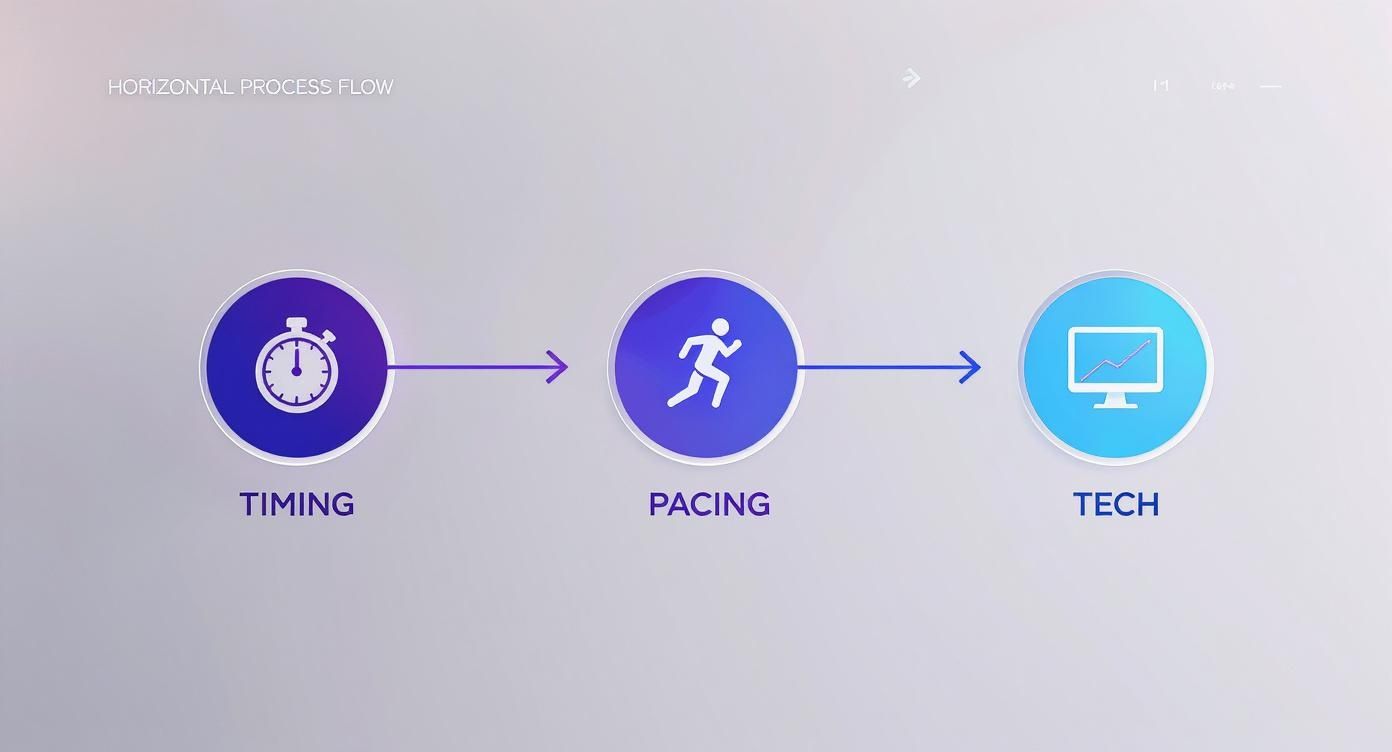
It’s a good reminder that getting these three technical details right is just as important as the creative idea itself. It’s what separates the amateurs from the pros.
Answering Your Top Questions About Video Intros
Alright, we've covered the whole process, but I know there are always a few questions that pop up. Let's tackle some of the most common ones I hear.
Getting these details right is what separates a good intro from a great one.
So, How Long Should My Intro Really Be?
For almost anything you post online, especially on platforms like YouTube, you want to aim for the sweet spot: somewhere between 3 and 7 seconds. Seriously, that’s it. It's just enough time to show off your brand and set the mood without anyone hitting the skip button.
Once you go longer than that, you risk viewers getting bored and clicking away. While you can get away with more time for a formal presentation or a personal movie intro on Plex, online content needs to be fast. Short and punchy always wins.
Should I Use a Template or Get a Custom Intro?
This really depends on your budget and how unique you want to be. A high-quality template is a brilliant shortcut. It’s an affordable way to get a slick, professional intro without waiting for weeks or spending a ton of money. It's perfect for new channels or businesses that need something polished, fast.
On the other hand, if your brand is super specific or you just can't stand the idea of someone else having a similar look, then a 100% unique, custom-made intro is the way to go. It guarantees that every single detail is built around your vision.
Look at it this way: both options get you a great-looking intro. The right choice is the one that fits your goals, your timeline, and how much you care about being one-of-a-kind.
What's the Single Biggest Mistake People Make?
Hands down, the most common mistake is making the intro too long. I see it all the time—people with these 15, 20, or even 30-second intros. That's a surefire way to lose a huge chunk of your audience before you've even started.
The runner-up is a total style mismatch. Think of a loud, dubstep intro for a calm meditation video. It’s jarring, right? When the vibe of the intro doesn't match the content that follows, it instantly feels weird and can make viewers lose trust.
Ready to create a professional intro that hooks your audience every single time? Priyansh Animations makes it easy. Choose from a huge catalog of stunning, customizable templates and get a high-quality video intro delivered fast. Start your project today at Priyansh Animations.